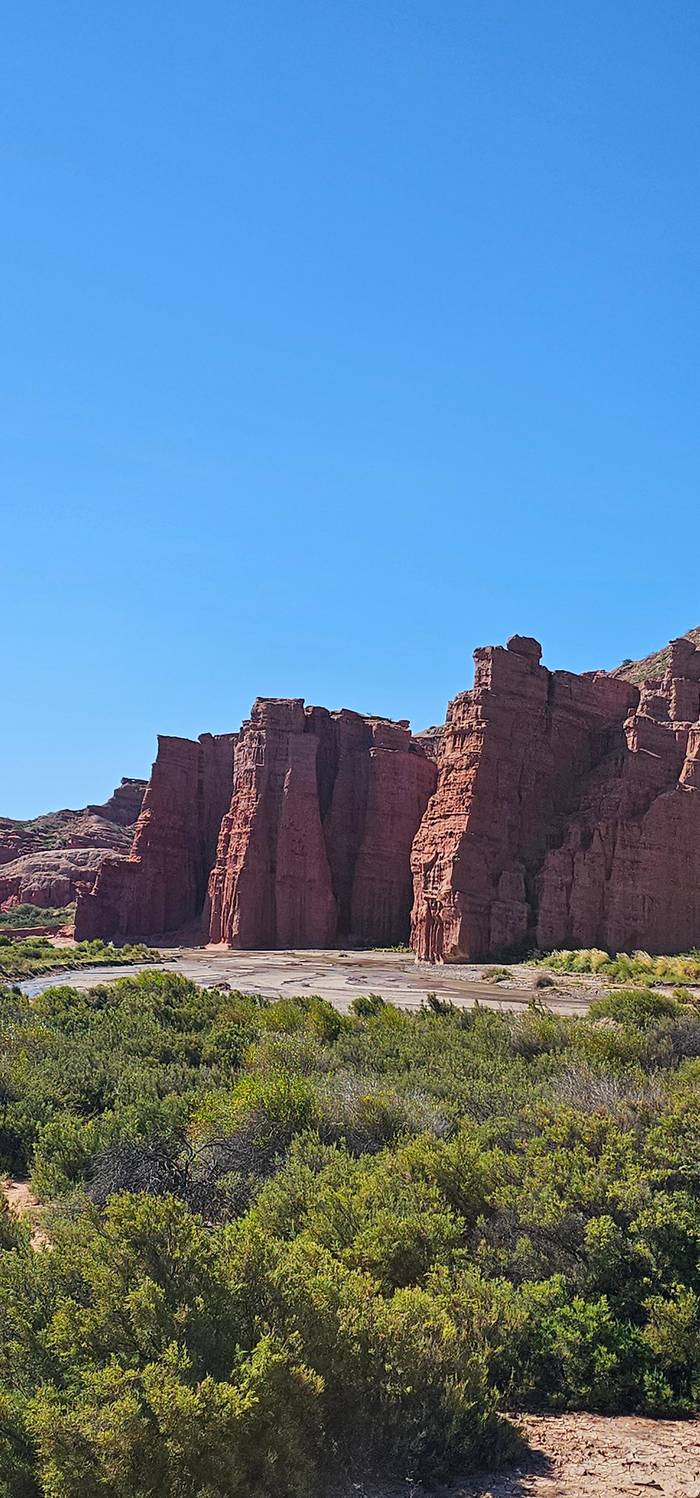
Most planted
Torrontés Riojano
The Cafayate grape
- Share80.1%
- StyleAromatic, dry
- Best atAltitude
Clickable checklist
Day trip from Salta to Cafayate
★ 4.4 · 494 written reviews
Prep list · 9 items
Tick items as you finish them. We save your progress on this device.
0 / 9 ready
That is everything. Only the date of your Cafayate day is left to pick.
Claim a spotThe Cafayate wine experience starts with one grape. Torrontés smells sweet, tastes dry and grows best high up. Here is where it came from, why altitude suits it, which reds share its valley and how to taste it.
Editorial team, cafayatetour.click · Updated November 11, 2026 · 8 mins to read
Torrontés is the wine you will be poured first in Cafayate, and it has a better origin story than most. Argentina's wine authority, the INV, recognises three different Torrontés varieties: Riojano, Sanjuanino and Mendocino.6 The one that matters here is Torrontés Riojano, an aromatic white grape that makes a dry wine with distinctive terpene aromas, compounds also found in flowers and citrus peel.1
For a long time people assumed it was a Spanish grape, and Salta's tourism ministry still describes it as a variety brought from Spain that found a unique expression in Salta soil.7 The INV tells a more interesting story. Attempts to link the Argentine grape to the Spanish Torrontés failed.8 DNA work concluded, with a high degree of probability, that the old Torrontés vines descend from a cross between Muscat of Alexandria and Listán Prieto.2
So the parents came from Europe, but the child was born in the Americas. That is why Argentines treat Torrontés as their own, and why the INV calls the Riojano type the one of highest winemaking quality.9 It also adapts to every growing zone, the report adds, and especially to the high ones of the northwest.10 Cafayate is where that adaptation is easiest to taste: the grape and the valley suit each other unusually well.
Know your grapes
| Grape | Colour | What to expect | Try it with |
|---|---|---|---|
| Torrontés | White | Roses, white peach, dry finish | Empanadas, spicy dishes |
| Malbec | Red | Plums, blackberries, deep colour | Grilled meat |
| Tannat | Red | Firm, dark, structured | Hearty stews |
| Cabernet Sauvignon | Red | Dark fruit, firm frame | Aged cheese |
| Mistela | Sweet | Fortified, grapey | Dessert |
Varieties and the Torrontés and Malbec notes from Salta's tourism ministry; the other notes and the pairings are our own suggestions.21,15,22,23
Lift the glass before you sip. Salta's tourism ministry describes the classic Torrontés nose as roses and white peaches, with the grape itself always in the background.15 Many first-timers expect a sweet wine from that perfume. On the palate it brings orange peel, white peach and fruit salad, which makes it seem sweet, but it is in fact a dry wine.16 That gap between smell and taste is the fun of the grape.
Small producers push the style in their own directions. The ministry's page on artisanal wine describes their Torrontés as vibrant and aromatic, with white flowers, citrus and a touch of spice.17 Some taste fresher and leaner, others rounder; trying one from a big estate next to one from a family cellar is the quickest way to understand the range. Notice how the finish stays clean even when the nose is loud. That dryness is what makes the wine so useful at the table.
Pairing is where Torrontés earns its place. The ministry suggests it with aperitifs, seafood, sushi, fusion cooking, spicy Thai dishes, Salta-style empanadas and northern locro.18 In Cafayate that means a cold glass beside a plate of empanadas at lunch, which is close to a local ritual. Avoid serving it too cold if you want the aroma; a few minutes in the glass opens it up. Its valley wines have collected many gold and silver medals in international competitions.19
The phrase on every label here is high-altitude wine, and the numbers back it up. Vineyards in the Calchaquí Valleys rise from 1,600 to 3,100 m above sea level.3 The INV's regional report notes that vines in the northwest are grown in irrigated valleys and in some cases above 3,300 m.25 Up here the air is thinner, the sunlight harder and the nights sharp, and every one of those conditions shows up in the glass.
That last point is the key. Salta's tourism ministry credits the wide gap between day and night temperatures, together with the soil, for wines with concentrated aromas, flavours and colour.26 In the valleys the swing between noon and night runs 10 to 15 °C.27 Warm days ripen the fruit, cold nights keep its acidity and perfume, and the result is a white that smells intense yet tastes fresh.
The ground does its part too. Around Cafayate the vines root in loose sand that lets rain run straight through, which keeps them thirsty and pushes sugar into the berries.28 Flecks of mica bounce the sunshine upward, so the bunches are heated from the ground as well as the sky.29 Add a dry, temperate climate that the ministry calls ideal for Torrontés and its red companions, and you have the reason so many wineries cluster in such a small valley.21
Find your tasting
Choose by time, base and how deep you want to go.
If I am based in Salta with one free day
The day trip with a vineyard stop
Includes a 45-minute vineyard visit with tasting.
If I am staying in Cafayate
A half-day winery circuit
Four wineries, 30 minutes each, small group.
If I want to make wine, not just drink it
Visit at harvest time
Activities run in February, March and April.11
If I love rare, handmade wine
Try vino patero or mistela
Foot-trodden wine survives in Animaná and San Carlos.24
If I prefer reds
Ask for Tannat and Malbec
Both grow beside Torrontés in the valley.21
The family
Most planted
The Cafayate grape
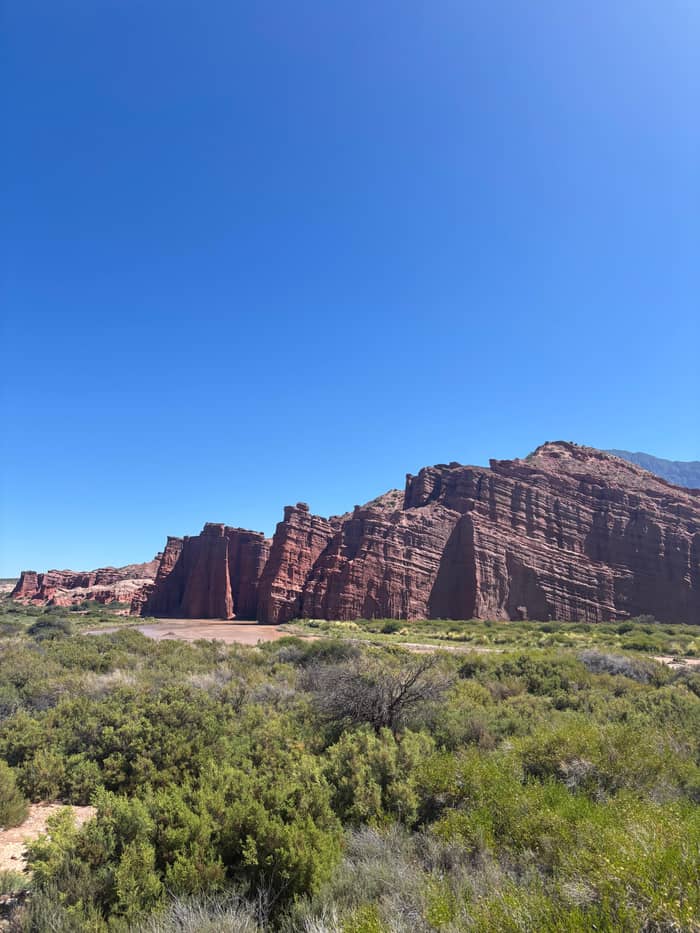
Blending white
San Juan's type
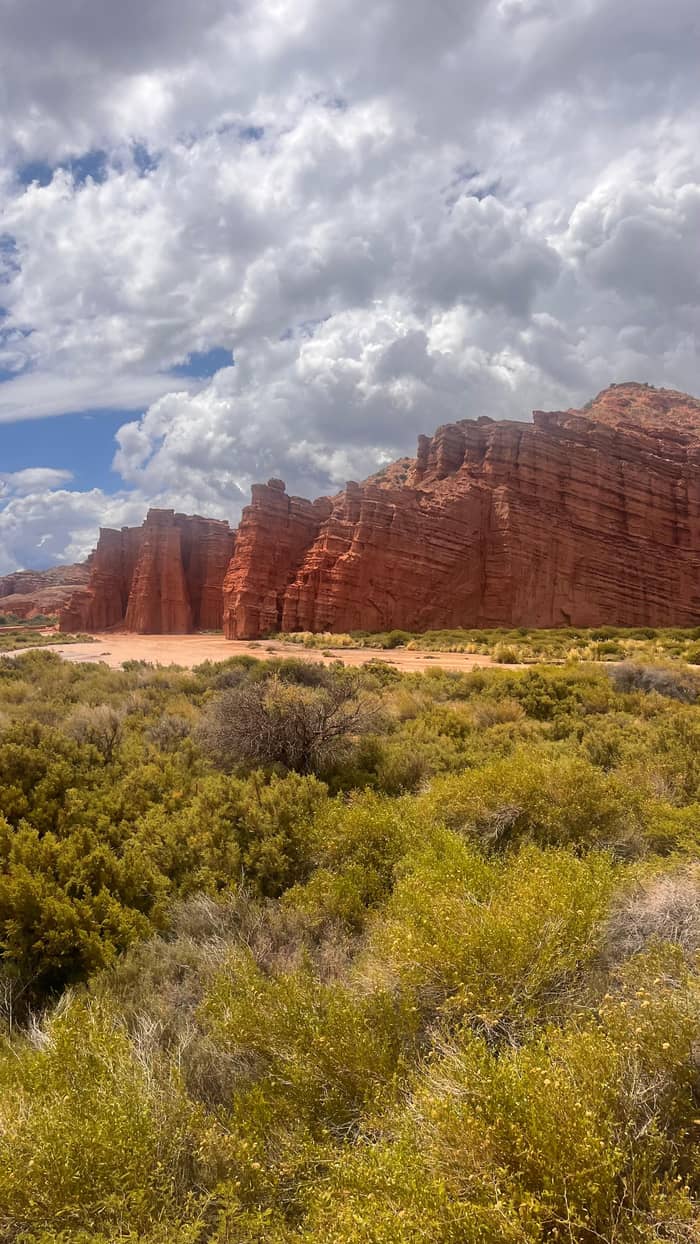
Least aromatic
Old home vines
Torrontés is famous, but it is not everywhere. On 1 September 2026 Argentina had 8,022 ha of it, just 4.1% of all its vines, and the area has shrunk by 24.6% in a decade.32 Riojano makes up 80.1% of that total, Sanjuanino 14.8% and Mendocino 5.1%.33 Torrontés Riojano alone covers 6,427 ha, enough to rank it as the second white wine grape in the country after Pedro Giménez.34
Surprisingly, Salta is not the biggest grower. Mendoza has the most Torrontés with 3,324 ha, followed by San Juan with 2,097 ha and La Rioja with 1,445 ha.20 Salta has 794.3 ha, and 486.3 ha of them, 61.2%, are in the Cafayate department, with another 298.0 ha in neighbouring San Carlos.4 In other words, almost all of Salta's Torrontés grows within a short drive of the town you are visiting.
Those vines are productive. Salta harvested 91,039 quintals of Torrontés grapes in 2026, 14.7% more than the year before.35 What makes the province stand out is quality rather than quantity: according to Salta's tourism ministry, 99% of the grapes grown there go into fine varietal wines.36 When you taste here, you are tasting a small, focused slice of Argentine wine rather than an industrial one.
Price your tasting
Choose a wine day and the number of travellers for a from-price.
Compare all 3 options
Choose a wine day and the number of travellers for a from-price.
≈
View≈
View≈
ViewStarting prices as on the booking platform, converted at the ECB reference rate. You see the exact price at booking.
The wine year
Late summer
Wineries open harvest activities in February, March and April.11
Harvest days
Guided picking, talks by winemakers and paired meals.12
April
One edition poured wine from more than 30 producers outdoors.13
Mid April
Salta's fair calendar lists 18 April.5
October
Tastings, food and art across the province.14
Wine is not new in the valley. The INV's report on the northwest states that the oldest vineyards in Argentina are in Salta province and date from 1862.37 A slow tasting is the best way to hear how a cellar's rows came to be planted, so give a small cellar more time than a big one.
Down the valley, the craft side of wine is very much alive. Animaná keeps the oldest winery in the area, more than 70 years old.38 There, and in San Carlos, visitors can see or join the making of vino patero, wine from grapes trodden by foot.24,39 A project for a homemade and artisanal wine route also promotes local styles such as mistela, a sweet drink of grape must fortified with alcohol before it ferments.23
Small does not mean marginal. Salta exports 1.5 million litres of wine to 30 countries, almost 10% of Argentina's total.40 The province's wine route brings together more than 60 providers, from wineries to hotels and food producers.41 And the tourism ministry ranks Salta as Argentina's second wine tourism destination.42 For a visitor that means the doors are open: big estates, tiny cellars and everything between.
Video
Wine With Jimmy on YouTube · Your tap on play is what loads the video.
On the palate Torrontés has flavours of orange peel, white peaches and fruit salad, which makes it seem like a sweet wine, but in reality it is a magnificent dry wine.
Torrontés may be the flagship, but the valley grows plenty of red. Beside it the ministry names Malbec, Tannat and Cabernet Sauvignon, plus Bonarda, Syrah, Barbera and Tempranillo.21 Altitude gives these reds thick skins and deep colour, and the sun pushes ripeness, so expect bold, dark wines rather than light ones. Tannat, a grape known for firm tannins, is the one to try if you have never met it.
Malbec is the red most visitors know. Salta Malbecs show deep colour and concentrated ripe black fruit such as plums and blackberries.22 Malbec Day appears on 18 April in Salta's list of fairs.5 During one Semana del Malbec de Altura, the wine museum in Cafayate planned a tasting under the open sky with more than 30 Salta wineries for 4 April, with entry at ARS 6,000.13 If you visit in autumn, look out for events like it.
On a wine tour in Cafayate, line up a Torrontés, a Malbec and a Tannat from the same winery. The contrast teaches more than any notes: the white for perfume, the Malbec for fruit, the Tannat for grip. Ask whether the reds see oak and for how long, and how high the vineyard sits. Producers here talk about altitude the way others talk about vintage, and the answer usually explains what is in your glass.
Salta labels carry a few names worth knowing. Wine exported from the northwest with a geographical indication includes Valles Calchaquíes, Valle de Cafayate, Salta and Cachi, and Valles Calchaquíes earns the most export revenue of them.30 A bottle that says Valle de Cafayate comes from the valley you are standing in; Valles Calchaquíes covers the wider valley system that runs north towards Cachi.
The easiest Cafayate wine tour from Salta is the day trip this site sells, which pairs the gorge with a 45-minute vineyard stop that includes a tasting. If you are staying in town, a half-day circuit can go deeper: one half-day option visits four wineries for 30 minutes each in a small group limited to 6 people. Book ahead in harvest season and on festival dates, when the cellars are busy.
Timing a visit around the calendar adds a lot. The 13th Semana del Torrontés de Altura ran from 5 to 16 October, mixing wine, food, art and tourism.14 In Cafayate it included an open-air tasting in the wine museum's patio with more than 30 wineries.43 Whatever the season, remember that Argentine law forbids selling any alcohol to anyone under 18, and that a driver should leave the tasting to the passengers.31
FAQ
Torrontés Riojano is an aromatic white grape that makes a dry wine with terpene aromas.1
Its nose suggests sweetness, but on the palate it is a dry wine.16
Calchaquí Valleys vineyards rise from 1,600 to 3,100 m above sea level.3
Salta tourism suggests seafood, sushi, spicy Thai dishes, Salta empanadas and locro.18
Also Bonarda, Syrah, Barbera and Tempranillo.21
Selling alcohol to anyone under 18 is forbidden nationwide.31
Sources
Read next
Riding from Salta to Cafayate? Ask a real person.